AI for Marketing in 2026: What Works, What to Skip and 6 Tools to Try
AI marketing has settled into a few uses that save real time and a lot that does not. We opened six tools on 16 October 2026 and describe each as its maker does, with our own rule for what to automate and what a person should still decide.

The 2023 version of this guide listed ten ways companies use AI for marketing, most of them examples with no way to check them. Three years later the picture is simpler. A few uses save real time, a few are overhyped, and the tools have turned from add-ons into agents that run whole workflows. This is a full rewrite for 2026.
We opened the website of six marketing tools on 16 October 2026 and describe each one as its maker does. We have not measured their results and we do not quote prices. The advice around them, what to try first and what to skip, is ours, and it comes from a simple rule: automate the jobs you repeat, keep a person on the claims.
What works, and what to skip
What tends to work. Jobs that repeat and have an obvious way to check the result: email subject lines and variations, ad creative variations, product descriptions from structured data, resizing and adapting images, summarising customer feedback, and drafting replies to common questions.
What to skip. Posting to social media with no one reading it first. Invented testimonials or reviews of any kind. AI images of a product where the real detail matters, such as clothing fit, ingredients or sizes. And collecting tools: three that overlap cost more than one you use properly.
| Job | Let AI draft it | A person should decide |
|---|---|---|
| Subject lines, variations, flow first drafts | Offer, claims, who gets what | |
| Paid ads | Creative variations, audience suggestions | Budget, product claims, what runs |
| Product pages | First drafts from your data | Every fact, size and material |
| Social | Ideas, caption options, resizing | What gets posted, replies to people |
| Reporting | Summaries of the numbers | What the numbers mean for you |
6 AI marketing tools to try in 2026
1. Meta Advantage+: AI for Facebook and Instagram ads
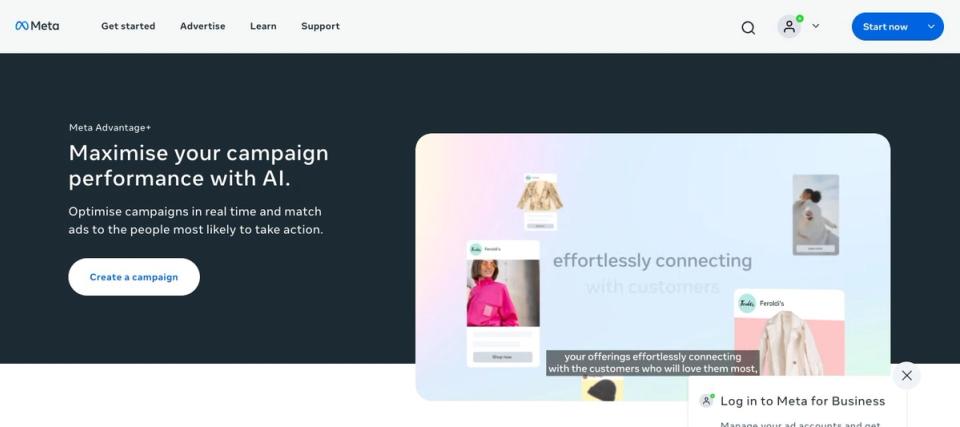
Meta Advantage+ is described by Meta as a suite of products that uses AI and automation to optimise campaigns in real time and match ads to the people most likely to take action.
Where it fits: stores already spending on Facebook and Instagram ads that want Meta to handle more of the targeting.
Be careful with: handing over control. Keep a manual campaign as a baseline so you can see whether the automated one is really better for you.
2. Klaviyo: email and SMS that adapt to each customer
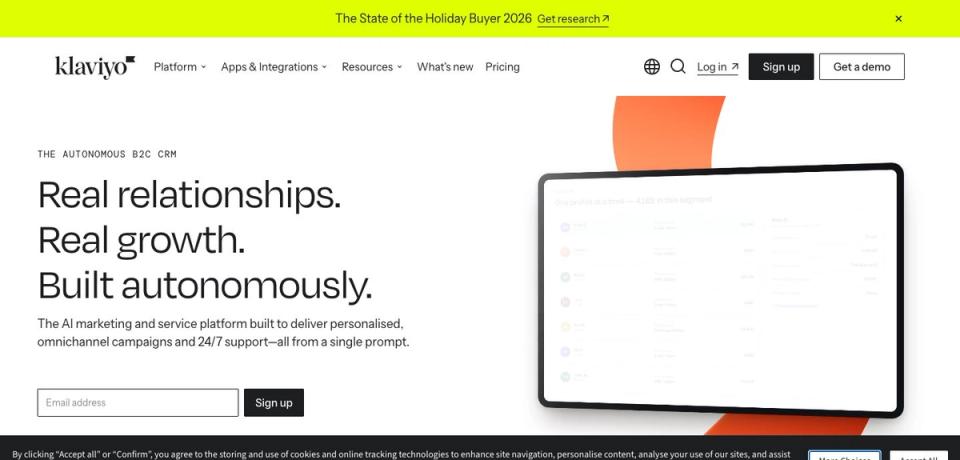
Klaviyo describes an AI marketing and service platform that builds personalised, omnichannel campaigns across email, SMS and WhatsApp from a single prompt, using K:AI Agents, and calls itself an autonomous B2C CRM.
Where it fits: ecommerce brands with a customer list worth segmenting.
Be careful with: sending to everyone more often. Better targeting should mean fewer, better emails, not more of them.
3. HubSpot Agent Hub: AI agents across marketing, sales and support
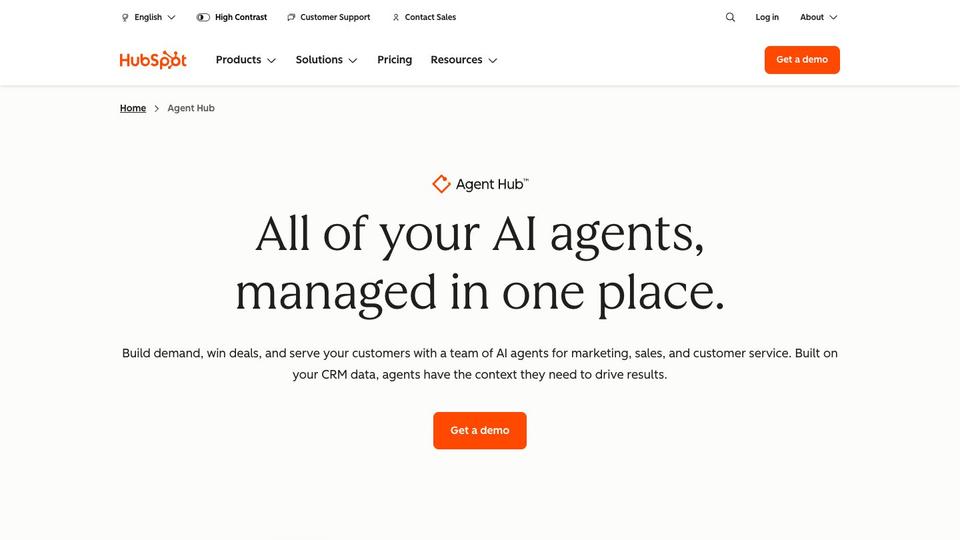
HubSpot's Agent Hub is pitched as one place to run and manage every AI agent your business uses across marketing, sales and customer service, built on your CRM data.
Where it fits: businesses already on HubSpot, where the agents can see the contacts and deals they need.
Be careful with: buying a CRM just for the agents. They are only as good as the data inside it.
4. Canva: design and writing tools with AI built in
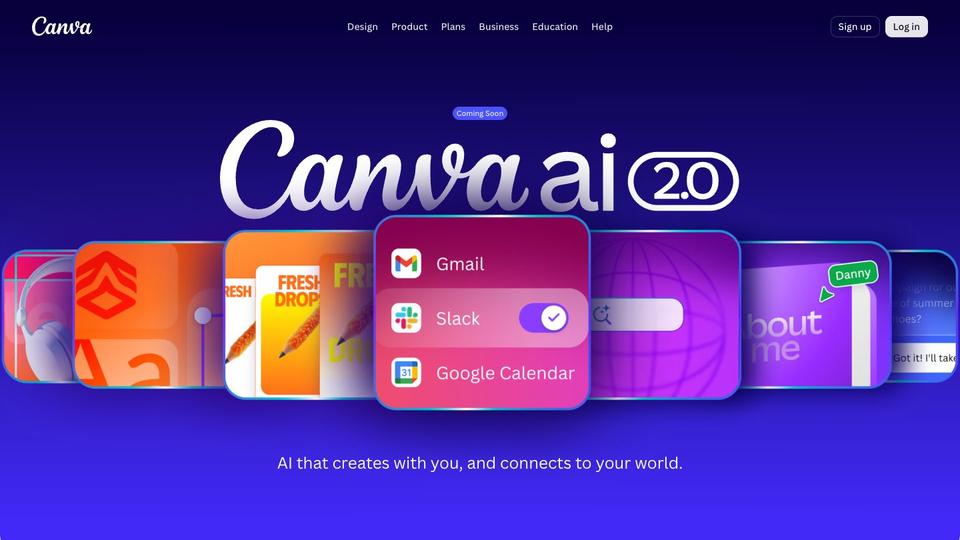
Canva says its AI tools for design, writing, brand, coding and more are available now, and that Canva AI 2.0, a way to design through conversation, is coming soon.
Where it fits: small teams that make their own social graphics, banners and presentations.
Be careful with: using generated product pictures in place of real ones. Customers return what does not look like the photo.
5. Jasper: agents for marketing workflows
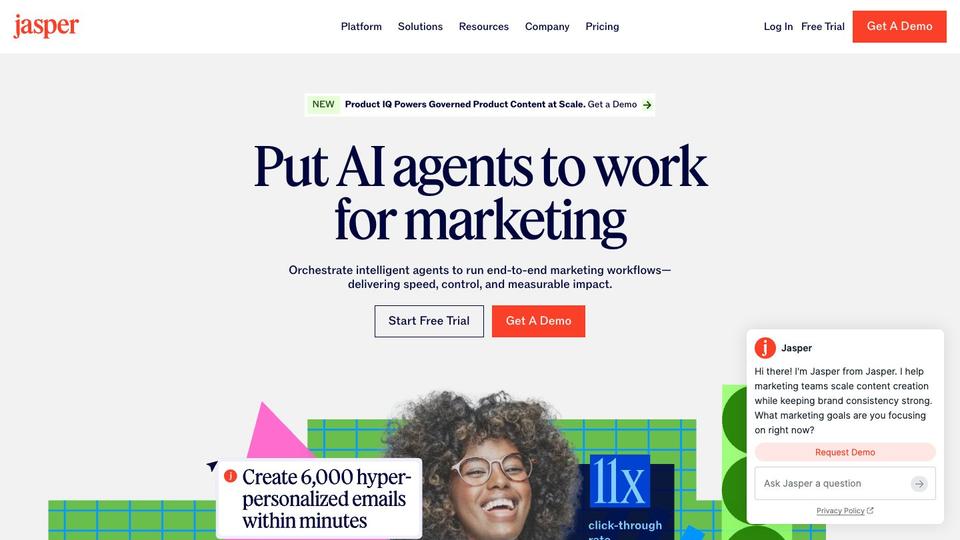
Jasper describes AI agents that run end-to-end marketing workflows with speed, control and measurable impact, and a feature it calls Product IQ for governed product content at scale. Its home page example is creating thousands of personalised emails within minutes.
Where it fits: marketing teams that need consistent brand voice across a lot of content.
Be careful with: volume for its own sake. Thousands of emails are only useful if the offers behind them are good.
6. Nosto: AI personalisation on your own site
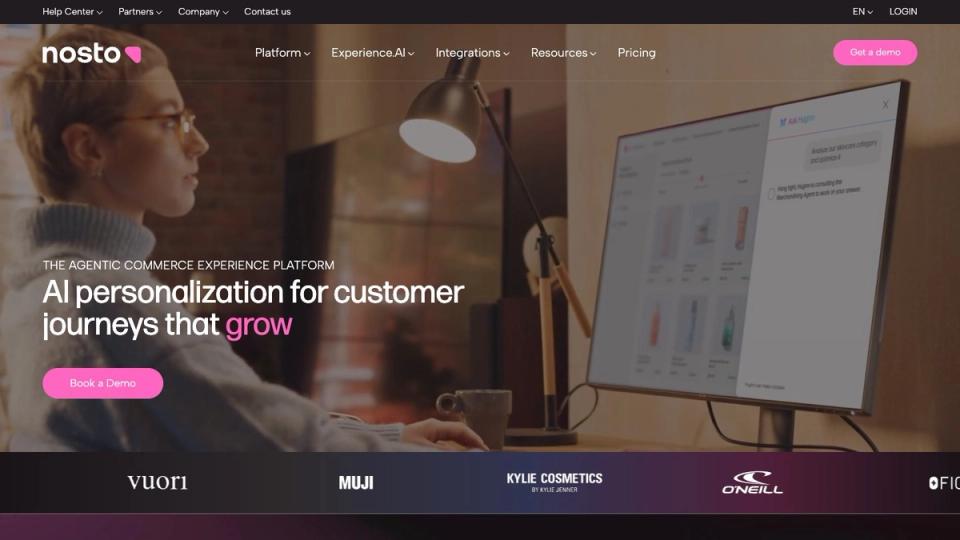
Nosto describes AI-powered ecommerce personalisation, merchandising and search tools, and calls itself an agentic commerce experience platform.
Where it fits: stores with enough traffic and catalogue to make recommendations and search matter.
Be careful with: judging it by a demo. Run it for a few weeks and compare average order value with the period before.
A general assistant belongs in the stack too
Before you buy any of these, try one of the general assistants for drafting and research. We compared eight in ChatGPT alternatives in 2026. For a lot of small stores, one good assistant plus Klaviyo covers most of what the specialised tools promise.
A one-month plan
- Pick one job you do every week, such as the abandoned cart email or ad variations.
- Write down how you do it today and how long it takes, so you have a before.
- Use one tool on that job only, with a person approving the result.
- Measure for four weeks against the before. Keep it only if the number moved or the time dropped.
If your marketing is working but the store converts poorly, look at the store first. Our conversion diagnostic finds where visitors drop off, and AI cannot fix a slow or confusing product page. Related reading: AI for ecommerce in 2026.
Frequently asked questions
How is AI used in marketing?
Mostly for drafting and variation (copy, subject lines, creative), for targeting and bidding inside ad platforms, for personalising email and on-site content, and for summarising data. The best results come from narrow jobs with a clear measure.
What is an example of AI in marketing?
Meta Advantage+ choosing who sees an ad, Klaviyo building a segment and a flow from a prompt, or an assistant drafting twenty subject lines for you to choose from.
Is AI marketing worth it for a small store?
Often yes, when you use it on one repeated job and measure it. It is a poor fit when you buy a platform to fix a problem that is really your offer or your product page.
Will AI replace marketers?
It takes over repeatable drafting and optimisation. It does not replace knowing your customer, choosing the offer or being accountable for the claims, and those are most of the job.