Shopify Hydrogen development: a storefront built your way, still running on Shopify.
We design and build custom headless storefronts on Shopify Hydrogen and Oxygen. Shopify keeps your products, checkout and orders; your customers get pages built exactly the way your brand needs them. And if a theme would serve you better, we tell you before you commit to a build.
Get started
Your own storefront design, with Shopify still running checkout, products and orders.
A Liquid theme decides a lot for you: how pages are built, how they load, where content can live. Hydrogen lifts those limits for the storefront. Checkout, admin and back-end logic stay on Shopify. Since the 2026-10 release, Hydrogen is a library that works with the framework your developers prefer, such as React Router, Next.js, Nuxt, Astro or SvelteKit. We render your pages on the server so search engines and AI crawlers can read them, and we measure speed on your real pages after launch.
The commerce engine does not change. Products, prices, inventory, discounts, checkout and orders all stay in Shopify, and the storefront talks to them through Shopify’s Storefront API. You get a custom front end without rebuilding the back office.

Deliver one store to every screen your customers use
What our Shopify Hydrogen development covers
Hydrogen consulting
Before anyone writes code, we check whether headless fits your store: the apps you rely on, your content, your team and your budget. If a Liquid theme will do the job, we say so.
Custom Hydrogen storefronts
A storefront designed for your brand and built on Hydrogen, with Shopify still running products, inventory, checkout and orders.
Liquid to Hydrogen rebuilds
Move an existing theme to Hydrogen page by page, with every URL, redirect and piece of structured data carried across.
Content and CMS setup
Connect Shopify metaobjects or a headless CMS so your team can edit pages, campaigns and stories without a developer.
Apps and integrations
Theme app blocks do not run on Hydrogen. We connect reviews, search, subscriptions, loyalty and analytics through their APIs, or build what is missing.
Care and upgrades
Hydrogen versions follow Shopify’s quarterly API calendar, and each API version is supported for a limited time. We keep your store current, monitored and fast after launch.
We have built a custom Hydrogen store for a client and we know the framework’s trade-offs first hand. We will show you both sides before you commit.
Fig & Bloom: a custom Hydrogen store, in the client’s words
“They’ve built custom Shopify apps for us, developed a completely custom Hydrogen store…”
What a headless front end makes easy. These screens are illustrations, not the client’s store.

A colour swatch that swaps the product picture right on the listing
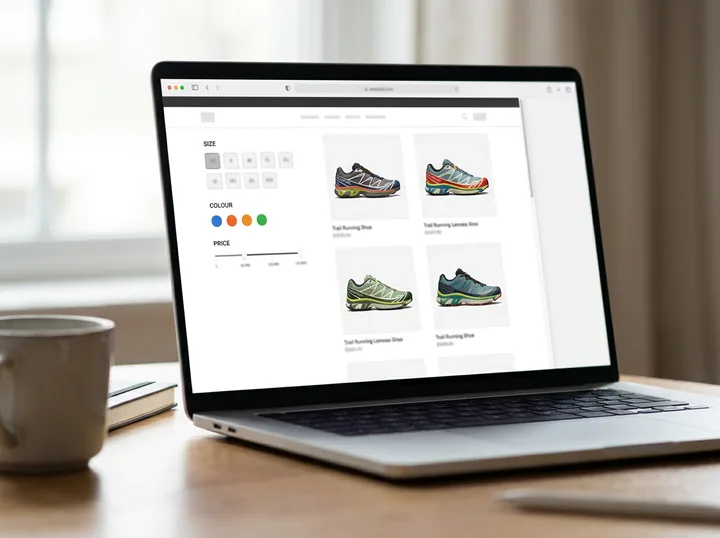
Filters that narrow a large catalog as you tap

A cart drawer where size and quantity change in place
Why choose Ecompanda?
We built one
Fig & Bloom’s founder says in his own review that we developed a completely custom Hydrogen store for them, alongside custom apps and AI automation.
Shopify first, custom second
Checkout, Shopify Functions and Shopify’s own features stay in place. We only build custom where your store genuinely needs it.
Mobile first, measured
We design for the phone first and judge speed by real-user Core Web Vitals after launch, not by a lab score on launch day.
You own everything
Your code sits in your own repository and deploys to your own Shopify store. Any developer can pick it up after us.
Honest about the trade-off
Shopify itself says a headless store costs more to build and run than a theme. We put that in writing before you commit, with what you gain for it.
The stores Hydrogen suits best, and what we build for each
DTC ecommerce
Brands whose story and product pages are the reason people buy. Custom product pages, bundles and editorial content that a theme cannot express, on a storefront that stays fast on a phone.

Apparel and fashion
Large catalogs with many colours and sizes. Quick colour and size switching, rich filtering, look books and size guides, all without full page reloads.

B2B and wholesale
Trade buyers who order in volume. B2B catalogs, volume pricing, payment terms and company accounts on Shopify’s B2B features, with customer-specific catalogs on Plus.

Our quality bar
Server-rendered pages. Speed judged on real users. Accessible components. Analytics that respect consent. Every old URL redirected. A written rollback plan for launch day.
When Hydrogen is the wrong choice
- Your store runs on several theme apps that have no headless version.
- Nobody on your side can own a codebase after launch, and you do not want a retainer.
- The goal is speed alone: a well-built Liquid theme is often fast enough and far cheaper.
- Your team edits the store in the theme editor every day and wants to keep doing so.
Shopify’s own docs put it plainly: “A headless storefront costs more to build and run than a theme.” In these cases a custom Liquid theme is usually the better buy. Shopify’s headless overview · our guide to custom themes
Questions
What is Shopify Hydrogen?
Hydrogen is Shopify’s toolkit for building a custom, headless storefront. Since the 2026-10 release (14 October 2026) it is a library that works with frameworks such as React Router, Next.js, Nuxt, Astro and SvelteKit. Your products, inventory, checkout and orders stay in Shopify; your storefront draws the pages customers see, using Shopify’s Storefront API.
What is Oxygen?
Oxygen is Shopify’s hosting for Hydrogen storefronts, included at no extra cost on the Starter, Basic, Grow, Advanced and Plus plans. Plus stores get 25 public environments, other paid plans one. Shopify also documents hosting on Vercel, Cloudflare Workers, Node and Deno, and we help you pick.
Do I need Shopify Plus for Hydrogen?
No. Hydrogen and Oxygen work on the paid plans. Since April 2026, Shopify’s core B2B features are on Basic, Grow and Advanced as well as Plus; those plans get up to three active B2B catalogs, assigned through Markets, while customer-specific catalogs, deposits and partial payments stay on Plus. We check your plan against your requirements before we quote.
Will my apps still work?
Apps that run in your admin or at checkout carry on. Apps that add blocks to a Liquid theme do not run on Hydrogen; they need an API version or a custom replacement. We list every app and what happens to it before you decide.
Is Hydrogen better for SEO?
It can be as good as a theme, not automatically better. Pages are rendered on the server, so search engines and AI crawlers can read them, but redirects, structured data, sitemaps and metadata all have to be built. We carry each of them across.
How much does a Hydrogen store cost?
More than a theme, because more is custom. We quote in writing after a short discovery, with build and running costs shown separately.
Is headless right for your Shopify store?
Tell us about your store, your apps and what a theme is stopping you from doing. We will reply with an honest view on whether Hydrogen is worth it for you, and what it would take.